Summary of chapter three - Edgar Josué Casarrubias Cárdenas 7A
15 Steady heat conduction terms
The glossary contains vocabulary and key concepts from the summary of Chapter 3 of the book 'Heat Transfer a practical approach' to get familiar with the terminology.
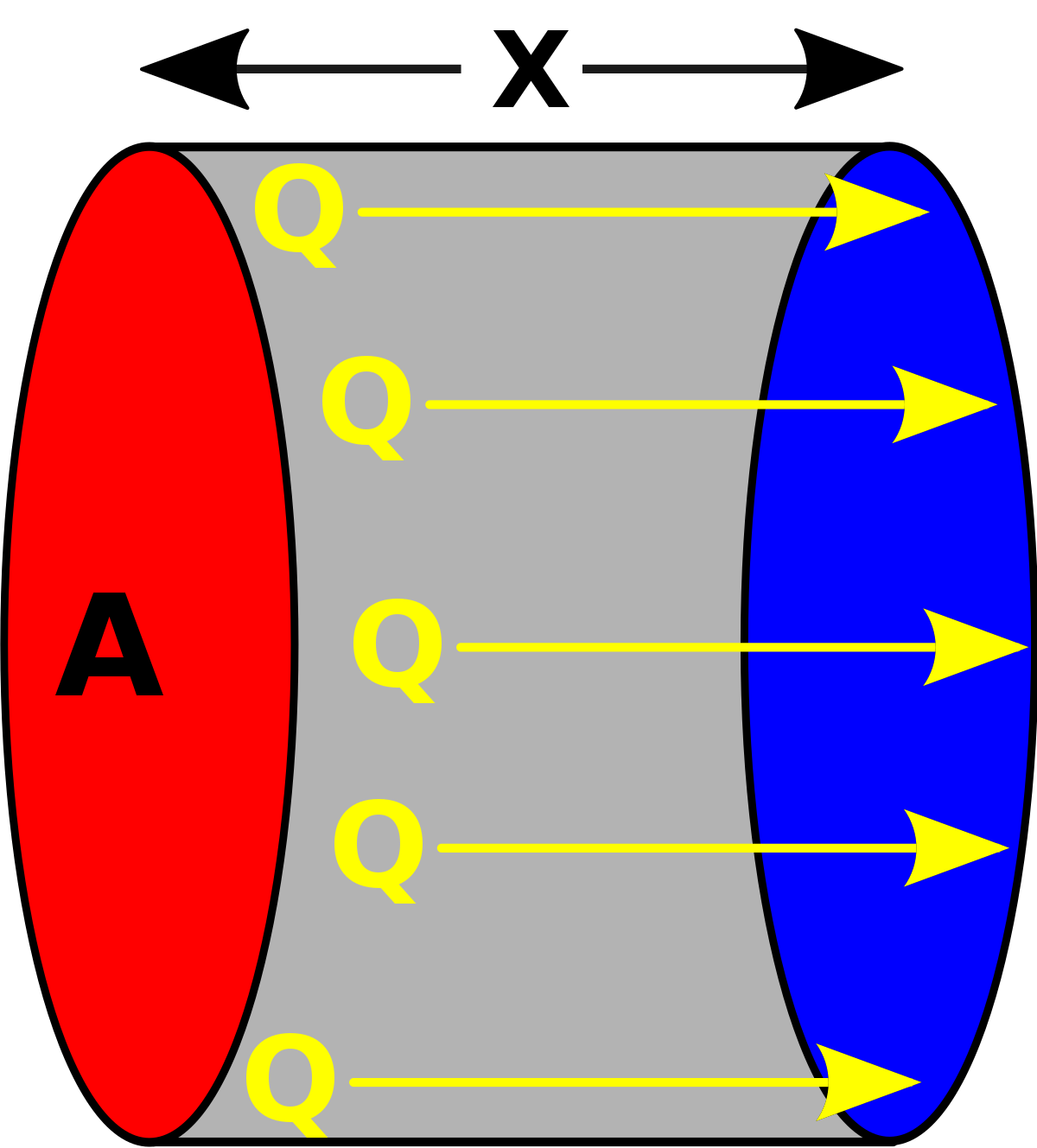
Conduction shape factor
Noun.
The ratio of a heat-transfer-area to a heat-transfer-length.
Example: The conduction shape factor depends on the geometry of the system only.
en: Factor de forma en la conducción.
Convection resistance
Noun.
The thermal resistance of the surface against heat convection.
Example: When the convection heat transfer coefficient is very large, the convection resistance becomes zero.
en: Resistencia a la convección.
Critical radius of insulation
Noun.
The ratio between the thermal conductivity of the insulation and the external convection heat transfer coefficient.
Example: It's important to know the critical radius of insulation of the plastic cover.
en: Relación crítica de aislamiento.
Cylinder conduction resistance
Noun.
The thermal resistance of the cylindrical layer against heat conduction.
Example: The cylinder conduction resistance depends on its inner radius, outer radius, length, and average thermal conductivity.
en: Resistencia a la conducción del cilindro.
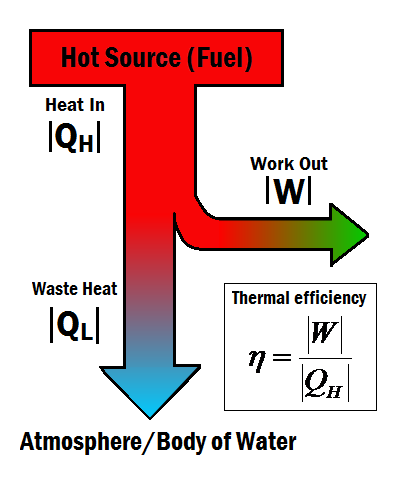
Efficiency
Noun.
The ratio of desired output to required input.
Example: The fin efficiency decreases with increasing fin length because of the decrease in fin temperature with length.
en: Eficiencia.
Fin effectiveness
Noun.
The ratio of the heat flow through the fin to that which would flow through the primary surface if the fin were not present.
Example: The fin efficiency and fin effectiveness are related to the performance of the fin.
en: Eficacia de la aleta.
Fin efficiency
Noun.
The ratio between the actual heat transfer rate from the fin divided and the ideal heat transfer rate from the fin if the entire fin were at base temperature.
Example: Fin efficiency relations are developed for fins of various profiles.
en: Eficiencia de la aleta.
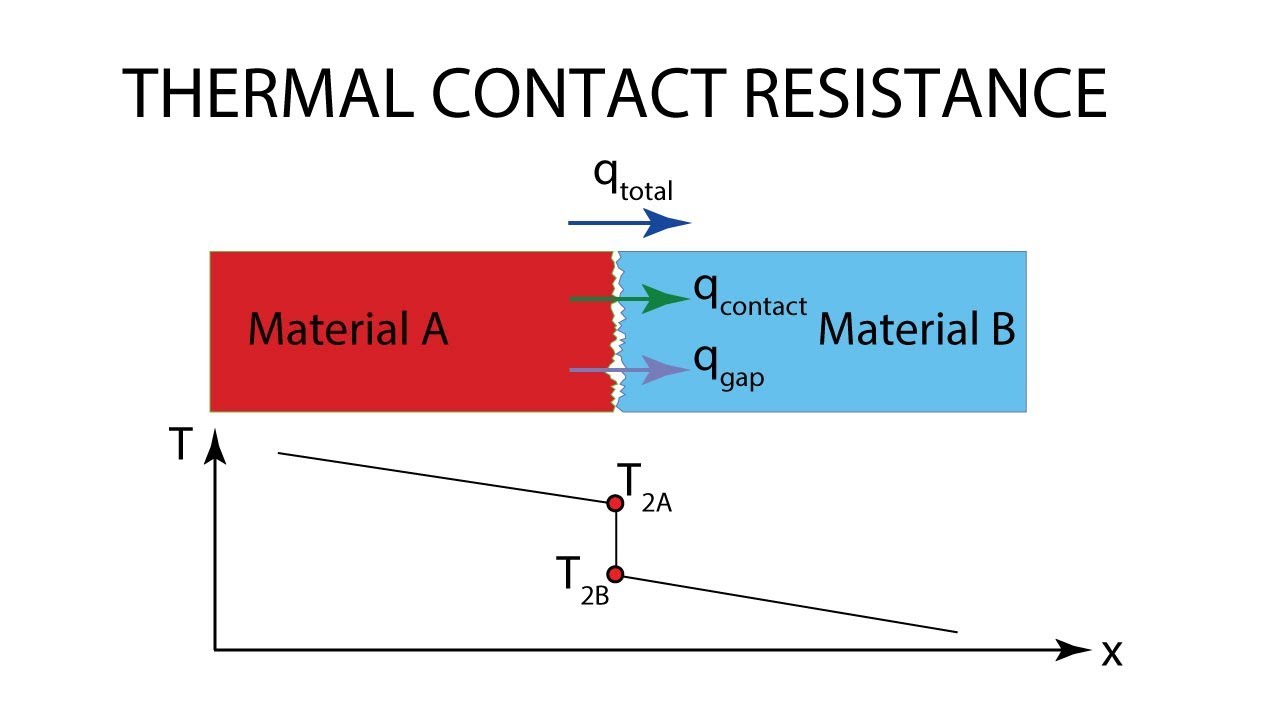
Interface resistance
Noun.
A measure of an interface's resistance to thermal flow, also known as thermal boundary resistance.
Example: Thermal interface resistance occurs whenever two solids of different materials are brought together to form an interface.
en: Resistencia de la interfase.
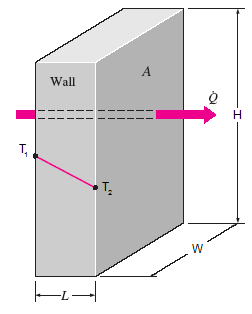
Plane wall conduction resistance
Noun.
The thermal resistance of the wall against heat conduction.
Example: The plane wall conduction resistance depends on its geometry and thermal properties.
en: Resistencia a la conducción de pared plana.
Radiation resistance
Noun.
The thermal resistance of a surface against radiation.
Example: The convection and radiation resistances are parallel to each other and may cause some complications in the thermal resistance network.
en: Resistencia a la radiación.
Sphere conduction resistance
Noun.
The thermal resistance of the spherical layer against heat conduction.
Example: We find the sphere conduction resistance using the analysis of the cylindrical layer by taking the surface area of a sphere formula.
en: Resistencia a la conducción de la esfera.
Surface
Noun.
The outside part or uppermost layer of something.
Example: A surface contains no volume or mass, and thus no energy.
en: Superficie.
Thermal contact conductance
Noun.
The convection heat transfer coefficient.
Example: The thermal contact conductance is highest for soft metals with smooth surfaces at high pressure.
en: Conductancia térmica por contacto.
Thermal contact resistance
Noun.
The resistance per unit interface area. It is equal to the inverse of thermal contact conductance.
Example: The concept of thermal contact resistance explains the effect of interface on heat transfer.
en: Resistencia térmica por contacto.
Total thermal resistance
Noun.
A heat property and a measurement of a temperature difference by which an object or material resists a heat flow.
Example: The overall heat transfer coefficient is equal to the inverse of the total thermal resistance.